
5 Base Oil & Lubricant Trading Terms Buyers Must Know

The process of international sourcing of base oil, lubricant, and aromatic materials requires the understanding of various technical details, specifications, and terminologies present in quotes and other documents. A misunderstanding of one specification could cost you a lot of money and time.
Here is an analysis of the five terminologies that you need to understand while selecting your base oil supplier. SynergySol Trading offers quality base oil, lubricant, and aromatic materials across the world. We believe an informed client makes a wise purchase decision.
The base oil is the initial substance for all commercially available lubricants. Usually, it accounts for 70–90% of the product's volume with additives accounting for the rest to adjust the lubricant's properties further. Since it is a large portion of the lubricant, the base oil is the substance responsible for the key properties of the latter, including its viscosity, thermal stability, and oxidation resistance. Thus, if the grade is selected incorrectly, the consequences are not only poor quality of the lubricant but also reduced lifetime of machinery and increased costs of repairs.
The thing is that the purchase order does not include an unspecified "base oil." It includes one of the grades: SN150, SN500, or Bright Stock, which differ from one another depending on viscosity ranges. Thus, knowing the characteristics of those grades allows procurement staff to interpret the quote and make a comparison of several offers fairly.
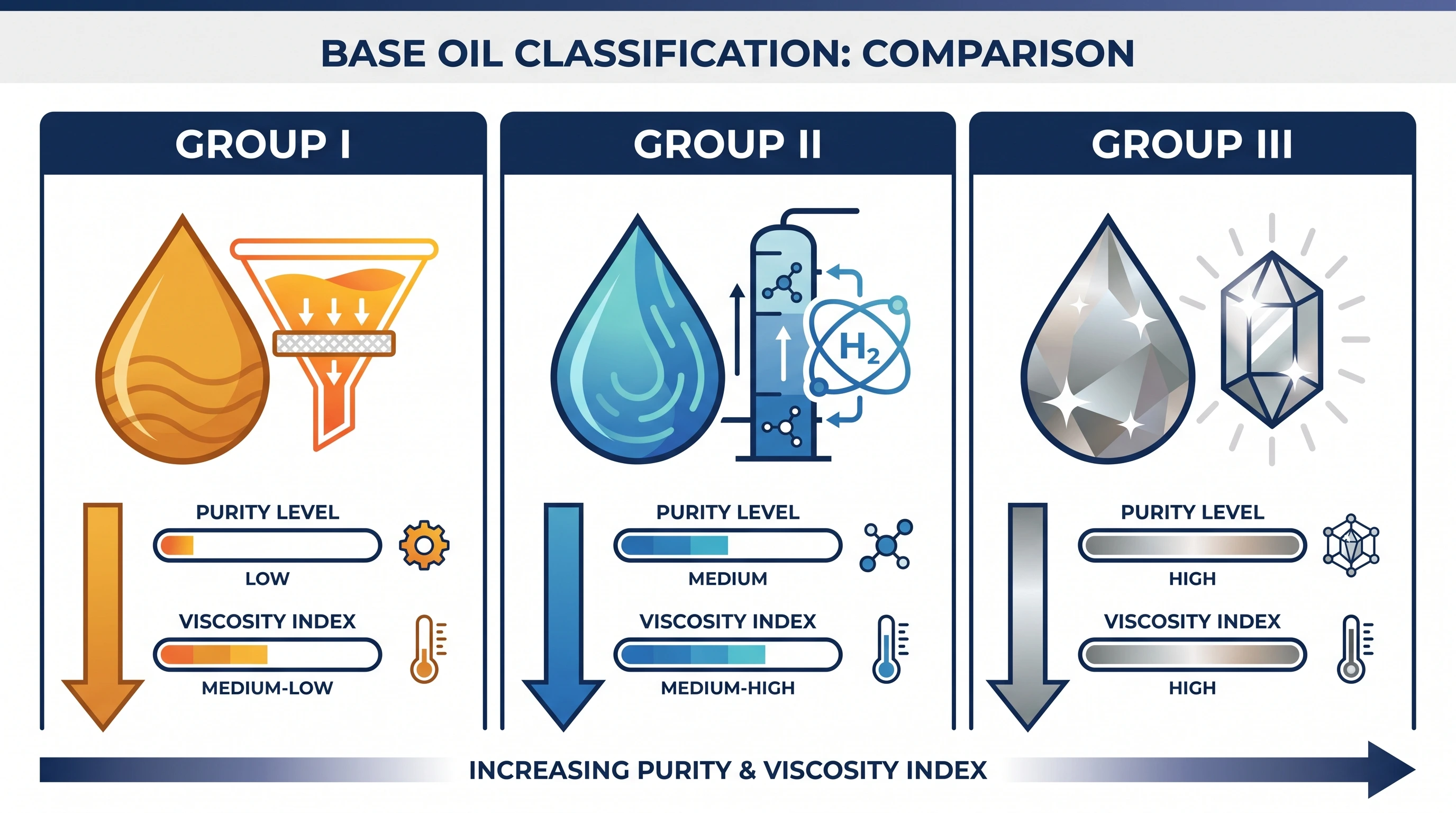
The American Petroleum Institute (API) classifies base oils into three groups based on refining method, purity, and viscosity index. This classification is one of the most searched and most misunderstood topics among first-time buyers.
Buyer Takeaway: The "best" classification is not necessarily the top one but rather the classification that suits the technical needs of your equipment. Overspecification will unnecessarily increase costs while underspecification can reduce the reliability of your equipment.
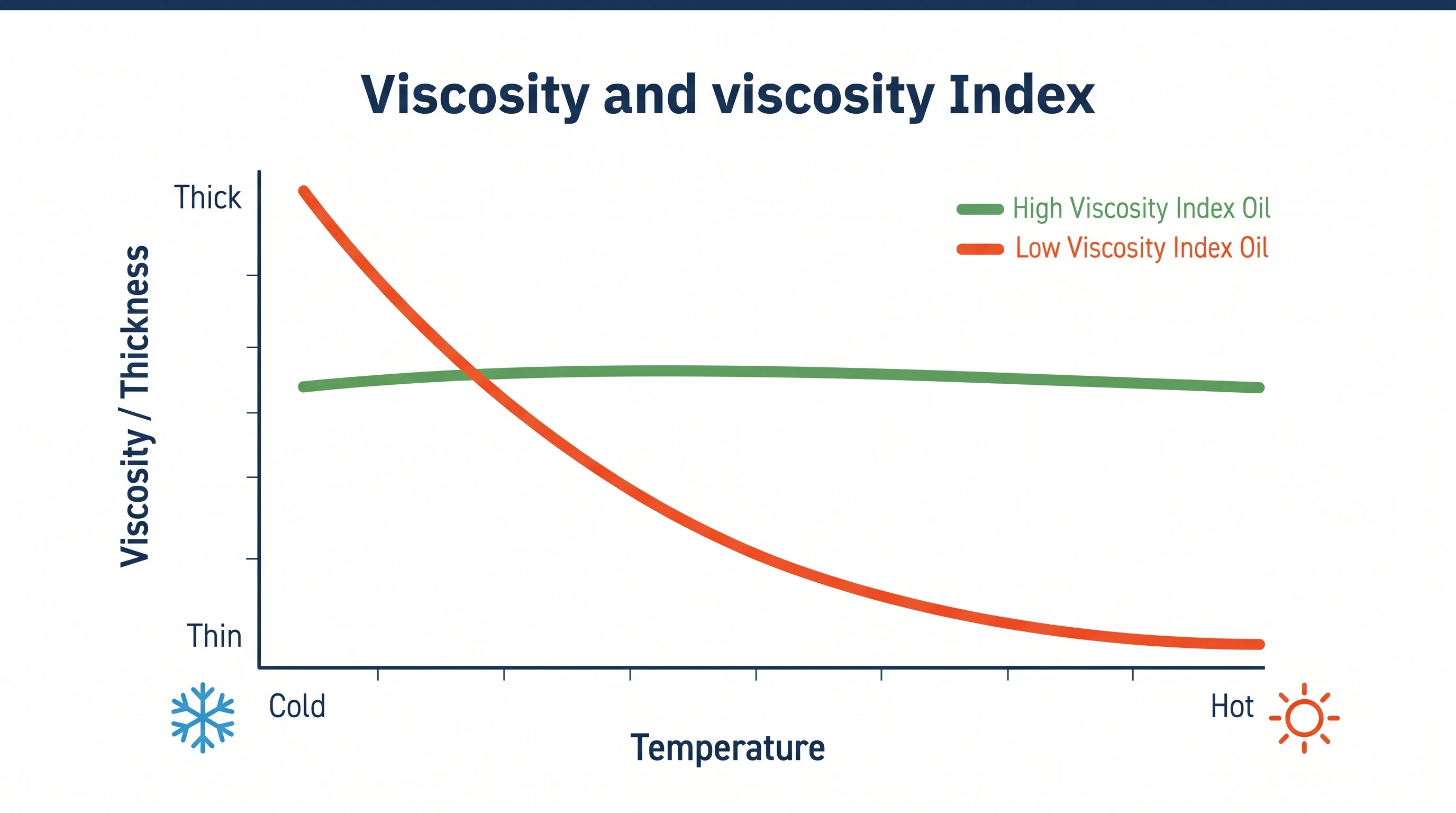
The kinematic viscosity is defined as the ease at which the lubricant flows at a specified temperature; usually tested at 40°C and 100°C. The viscosity index (VI) is defined as the resistance of the viscosity to change with temperature; a high VI oil will maintain its performance through all operating temperatures, whereas low VI oil will change either thinning out or thickening up.
These are two completely different parameters, and both should be considered together; two oils may have the same viscosity at 40°C but behave very differently in practice depending on the viscosity index. Group II and Group III base oils usually provide a higher viscosity index than Group I. Both parameters should be considered on the technical data sheet rather than the oil name only.
Certificate of Analysis (COA) ensures compliance with pre-agreed technical parameters such as viscosity kinematic and viscosity index, flash point, pour point, density, etc., prior to the shipping from the supplier's premises.
Tip: always check the COA against your own purchase specification and not only against the stated grade, because two "SN500" oils from different suppliers may vary greatly in terms of actual performance.
Incoterms are standardized trade rules published by the International Chamber of Commerce that define who is responsible for freight, insurance, and risk transfer during international shipment. The three most common in base oil and lubricant trading are:
Comparing supplier quotes without checking the Incoterm can be misleading, a lower FOB price may end up costing more once freight and insurance are added.

Group I oil is solvent-refined and cost-effective; Group II is hydroprocessed, which makes it pure and highly stable against oxidation; Group III is hydrocracked with superior viscosity index and thermal stability and is used for producing premium synthetics.
This certificate is your guarantee that a particular consignment corresponds to the negotiated technical parameters prior to shipping, providing you with documentary proof of quality for each order.
There is no one best option. It is up to the circumstances as the party that is better positioned to organize transportation and insurance must be responsible for them. Always compare landed costs when choosing among Incoterms.
Now that you understand the terminology, the next thing is finding a reliable supplier that ensures all consignments are backed up by the necessary documents. SynergySol Trading provides high quality base oils, lubes, and aromatics to our customers around the world – with each and every consignment we provide a full Certificate of Analysis, Incoterm based pricing, and assistance in choosing the appropriate grade for your specific application.
From Group I, Group II, Group III base oil, SN150, SN500, Bright Stock or aromatics we are here to assist you with all of your needs.
Contact SynergySol Trading today to request a quotation or speak with our specialists about the right product for your business.