
Additives vs. Base Oil: What Really Matters in Lubricant Performance
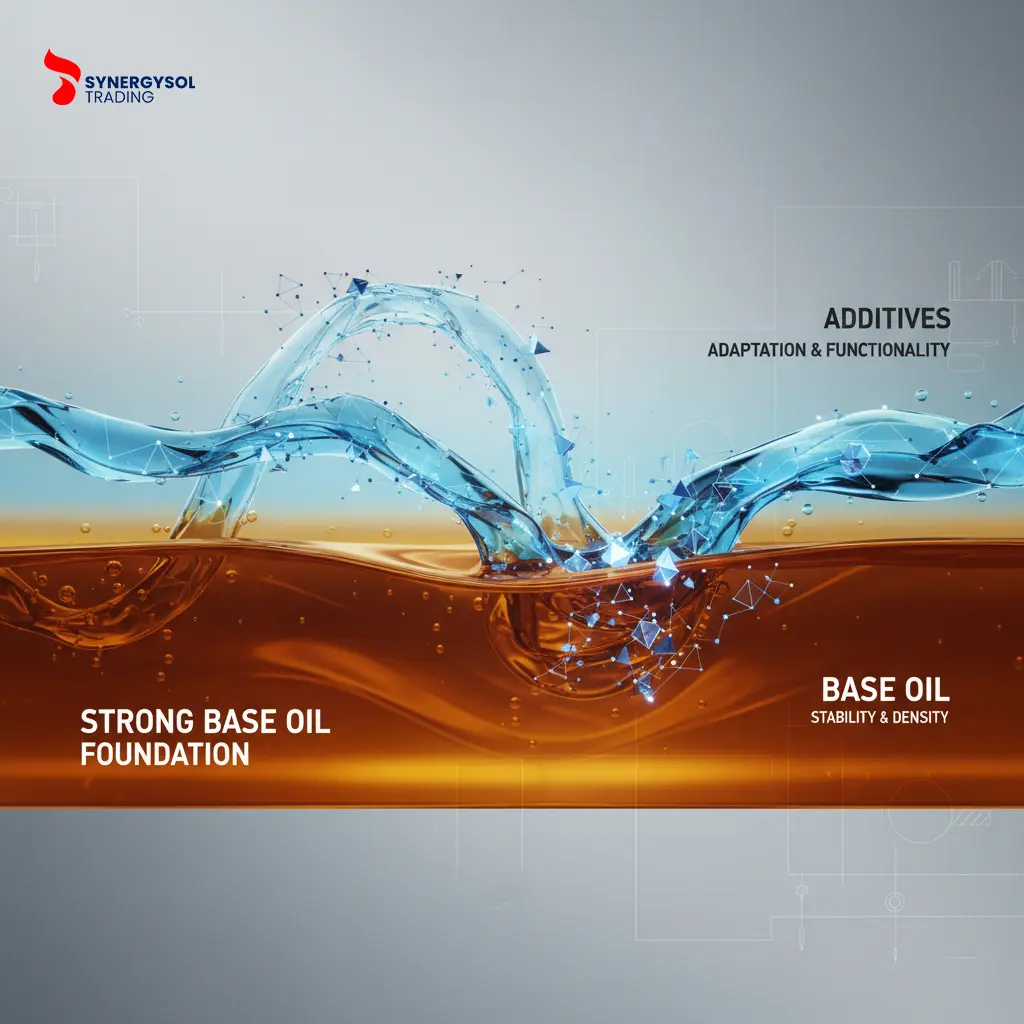
In the formulation and mixing of a lubricant, people often wonder which one to prioritize in the formulation and mixing process, additives or base oil. Additives are often prioritized more than base oil because they sound "high and tech," but the truth in this case is simple: base oil forms the foundation in all oil formulations and mixing, and the use of additives aims to enhance and protect it.
From engine oil, through oil used in hydraulics and turbines, the key to the creation of oil that performs well and lasts longer is comprehending the synergy that occurs between the base oil and additive elements.
At Synergysol Trading, working with us as a manufacturer, blender, or industrial buyer of lubricants, will ensure that the necessary decisions are made choosing the ideal solution in operating conditions, which are critical in order to reduce wear as a result.
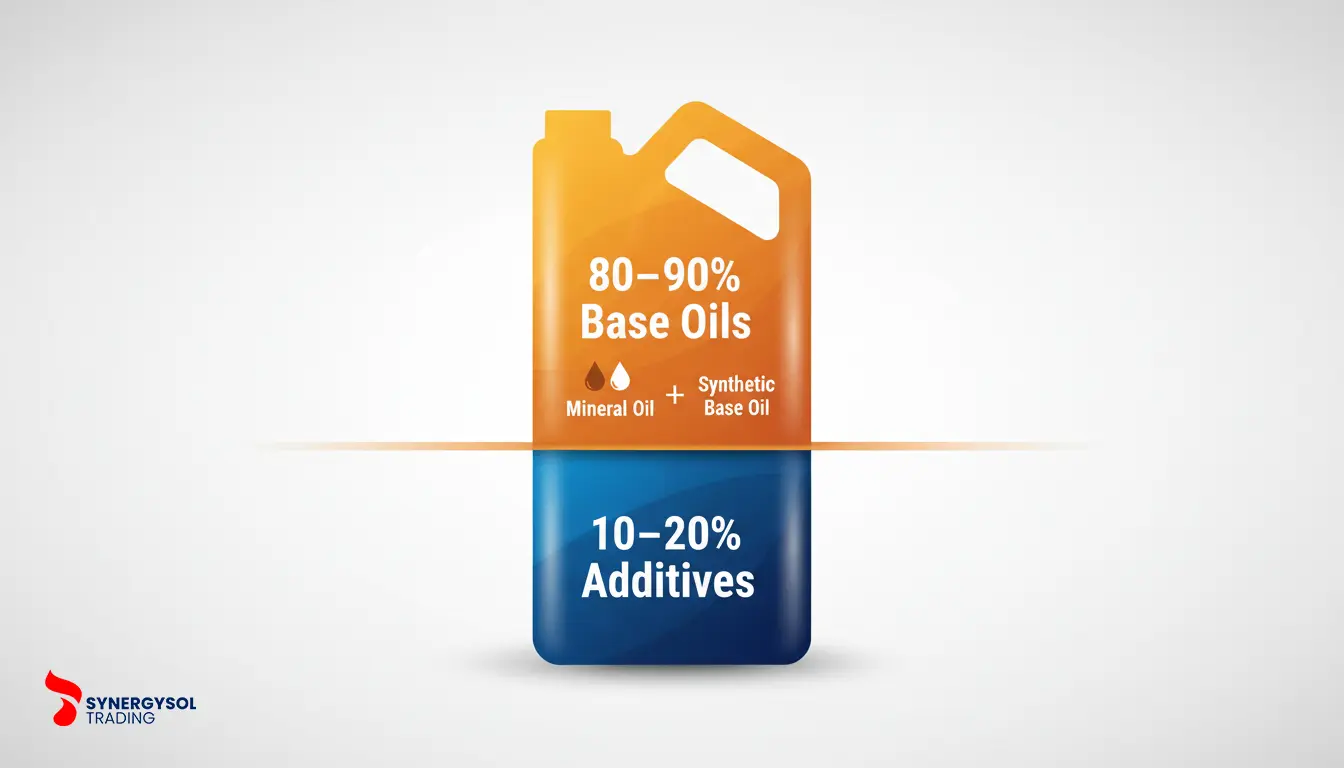
Since base oil accounts for 70-99% of the finished lubricant, the biggest influence on the properties is that of the oil itself. A large portion of the properties that are most pertinent are directly the responsibility of the oil, with additive content being unable to compensate.
Base Oil Controls:
Additionally, unless the base oil is resistant to degradation by heat or the action of oxygen, an additive solution simply does not exist. That is the reason for properly formulating a lubricating oil, starting with the selection of the right base oil.
👉Selecting the right base oil is the first step in building a reliable lubricant, learn more in our detailed guide, How to Choose the Right Base Oil for Lubricant Formulation.
One misconception is that a high level of additives can compensate for a low quality base oil. The opposite is true, as a short life cycle is experienced.
Key reasons include:
For example, poor quality base oil, however antioxidant-treated, will still form sludge and varnish. The additives can aid, although they must be remembered as totally incapable of altering the inherent quality of the oil.

Successful lubricant formulation depends on compatibility between the base oil and additive system, ensuring proper additive solubility and long-term performance.
Better quality base oils, such as Group II and Group III base oils and synthetic base oils, often require fewer additive quantities to attain comparable performance and sometimes better performance than base oils of poorer quality.
The relative importance of base oil and additives depends on operating conditions.
In demanding environments, both components must be carefully engineered to work together without compromise.
Although improved properties of the base oil and additive system may drive up initial cost, they may reduce the overall cost of operation by:
Many industries where base oil is utilized understand that an investment in the correct base oil will provide greater long-term value compared to additive intensive formulations that may have poor base oil properties to start with.
When comparing additives and base oil, the answer is not one or the other, but which one sets the foundation.
Base oil determines:
Additives determine:
In professional lubricant formulation, base oil quality always takes precedence; additives are selected to be compatible and protect the base oil.
At Synergysol Trading, we understand that reliable lubricants depend on the right balance between base oil quality and additive technology.
We offer:
Looking for guidance on selecting the right lubricant solution? Contact Synergysol today to ensure long-lasting performance and equipment protection while looking at the Senergysol Trading variety of 👉services and 👉products.
Base oil matters more because it defines the fundamental performance limits of the lubricant, while additives enhance and protect those properties.
No. Additives cannot correct fundamental weaknesses such as poor oxidation stability or inadequate viscosity control.
Yes. Higher-quality base oils often achieve better performance with lower additive treat rates.
Additives provide wear protection, cleanliness, corrosion resistance, and performance enhancement that base oils alone cannot deliver.
The correct balance depends on application, operating conditions, drain interval targets, and cost-performance objectives.