
AI in the Lubricant Industry: What It Means for Business
The lubricant industry has always been built on chemistry, engineering, and market knowledge. However, the year 2026 marks a transition for this sector. How businesses procure base oils, navigate their logistics and supply chains, and handle the procurement process is undergoing changes, and artificial intelligence is key to it all.
As a blender in Europe, as a procurer in the Gulf, and as an operator of vehicles in East Africa, artificial intelligence in the lubricants industry cannot be ignored in 2026. It is here and now, and the firms that realize it sooner will have the edge in the coming years.
Most lubricant businesses today still rely on manual processes. Phone calls to check prices, spreadsheets to track inventory, gut feeling to anticipate shortages. For decades this worked. In 2026 it no longer does.
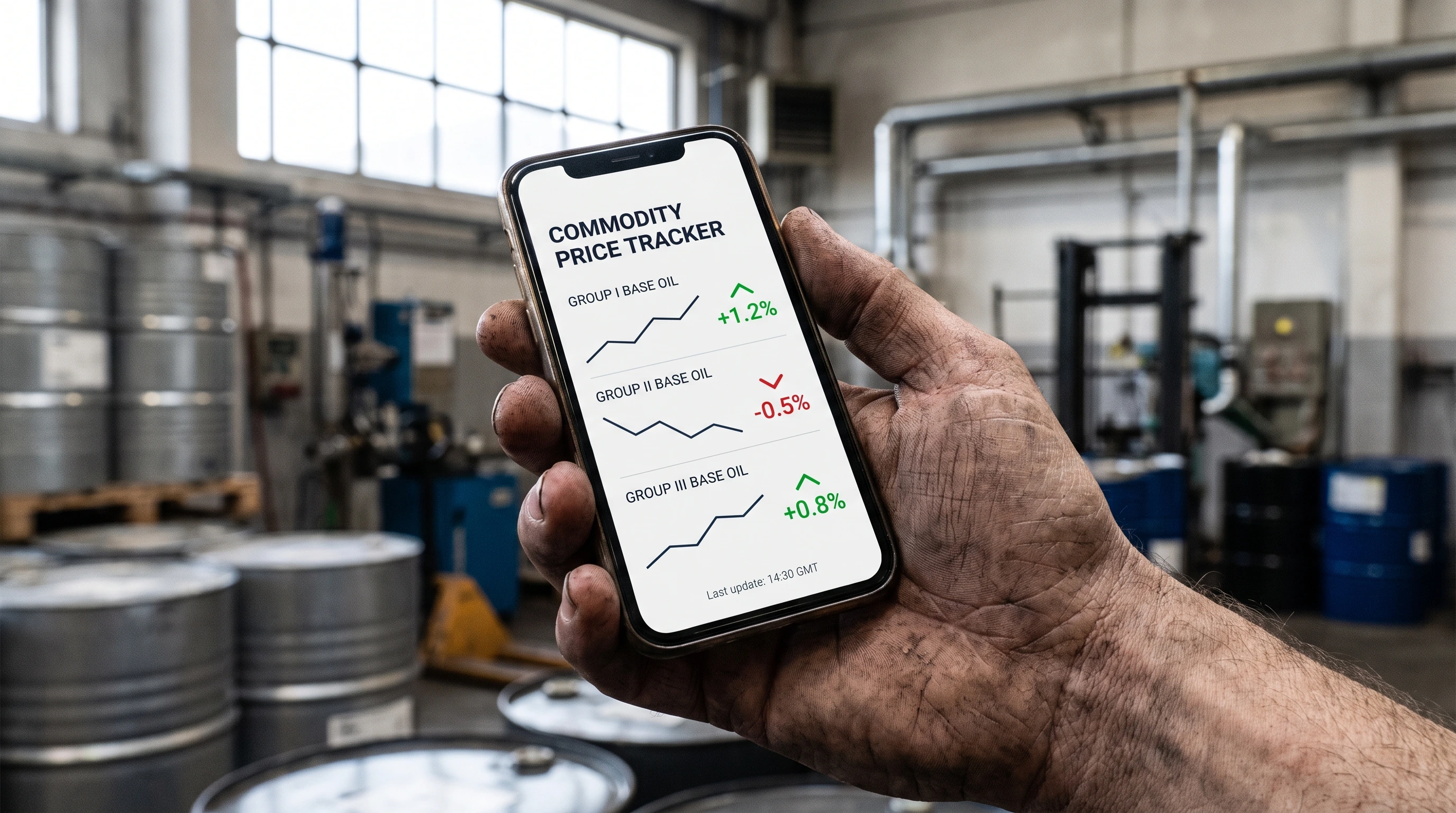
The prices for the base oils can fluctuate greatly within a month or two. For example, because of the supply problems in the Middle East in 2026, the prices for the Group III were raised up to 100%. There is no way to handle this situation manually.
With the help of artificial intelligence software, companies can control the prices for the base oils and additives provided by different suppliers. In this way, reducing the price for materials by 3 to 7%. Furthermore, there will not be any interruptions in production processes due to supply problems.
Nowadays, it is absolutely essential for all companies which purchase base oils to use this technique.
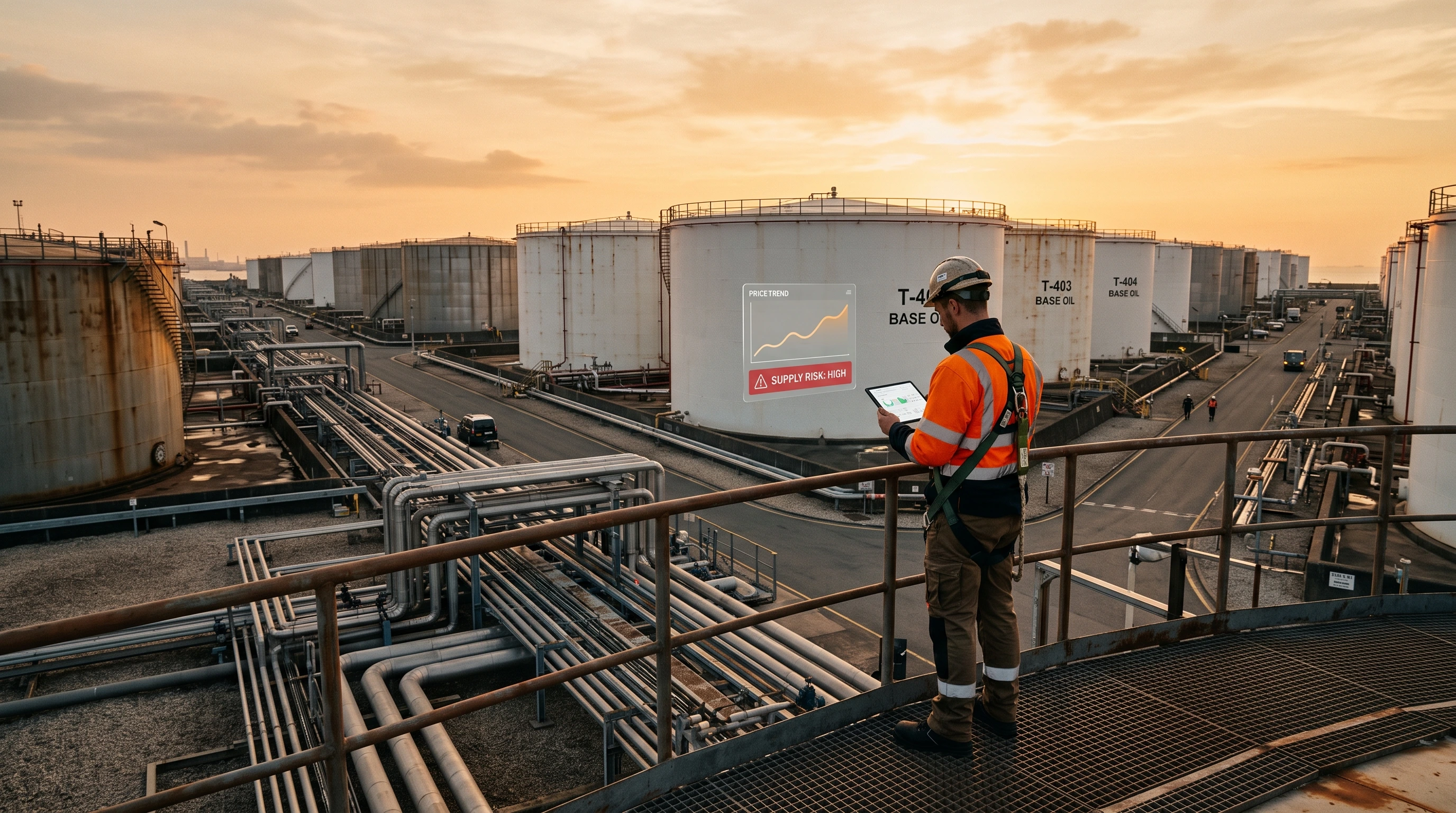
The optimal use of AI technology within the lubricants logistics chain will be early warning. Through early warning, the AI technology will examine trends within the financial performance of the suppliers, geopolitics and the market to identify potential risks at an earlier stage than human analysts can.
Early warning is the difference between securing supply at a fair price and scrambling for alternatives at a premium.
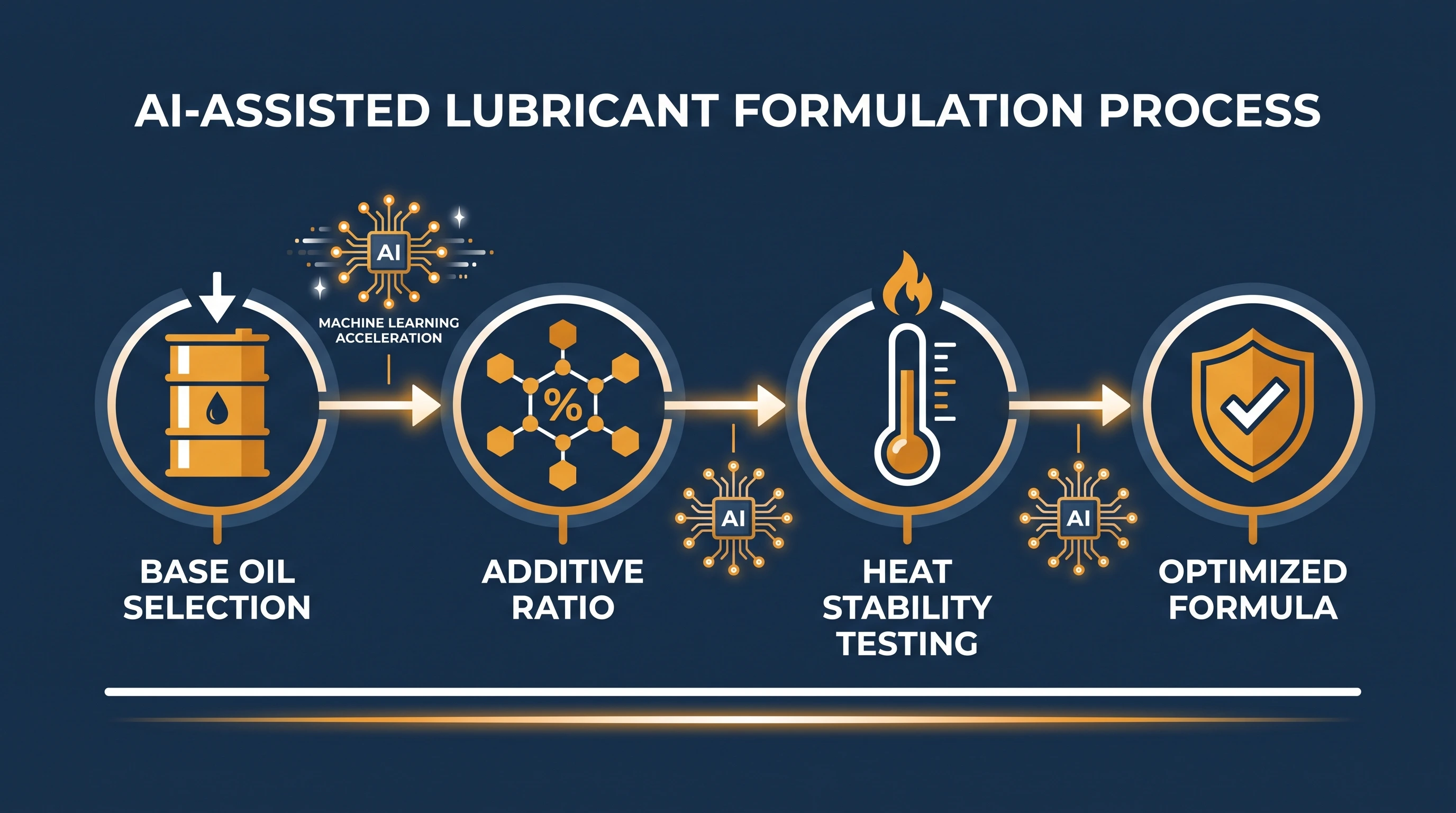
AI cuts down the duration required for lubricants’ R&D by up to 40%. By using machine learning algorithms, thousands of lubricant formulations' variables, such as viscosity, additive percentage, base oils, and heat stability, among other aspects, can be optimized much more quickly compared to traditional laboratory experiments.
AI has been helping lubricant developers to lower their R&D costs while saving time on reaching their markets. Lubricant developers utilizing AI technology in automating recipe modifications in their manufacturing process have reduced sub-standard batches by up to 60%.
For prediction of the demand, AI-based algorithms make use of historical information along with other parameters such as seasonality, delivery time, and reliability of suppliers to ensure that inventory levels are always optimal. Earlier, such high-level forecasting accuracy could not have been achieved by lubricant suppliers having many SKUs across diverse marketplaces.

If you’re an lubricants blender or a base oil purchaser, there are three key implications that arise for you from the use of AI in the lubricants industry:
Speed will be a critical factor. As we’ve noted, Group III availability is falling fast from 2026 onwards, reaching a tipping point by 2027. Relying on monthly price reports is not going to cut it anymore; AI allows you to see the situation in real time, providing you with a competitive edge over your competition.
Supplier management takes on new importance. Your technology can provide early warnings about supply disruptions, but it won’t help you mitigate the risk – only your trading relationship with your supplier can do that for you.
The divide between first-movers and late-movers grows ever wider. Most of your competitors are still operating reactively. The window to get ahead is open right now but it will not stay open long.
At Synergysol Trading we know that technology isn’t sufficient in solving supply chain problems. What helps in resolving the problems involves integrating market information with proper sourcing and the best products available when needed.
We supply base oils, which include Group I, Group II, and Group III, to lubricant blenders and manufacturers as well as other traders in the Middle East, Africa, and Europe. Our unique trading methodology depends on close market observation, multiple sourcing routes, and supply reliability which even artificial intelligence cannot achieve.
AI in the lubricant industry is not a trend to watch from a distance. It is already reshaping how procurement decisions are made, how supply risks are managed, and how businesses stay competitive in a market that moves faster every year.
The question is not whether AI will change your business. It is whether you and your supply chain partners are ready for it.
Reach out to Synergysol Trading today to discuss your base oil supply requirements or Ignitol lubricant needs.