
Base Oil Packing and Incoterms: Why a Clean Still Doesn't Guarantee a Clean Blend
A still can run perfectly clean and the blend still fails. Nine times out of ten, the plant wasn't the problem. Everything that happens after the oil leaves the plant — the tanks, the hoses, the packing, the paperwork trailing behind it — is where things go wrong.
Every coupling in that chain is a chance to pick up water, the wrong grade, or the residue of whatever moved through that tank last. Who's on the hook when that happens comes down to two things: the packing and the Incoterm. Put the pack, the port, and the last cargo on the RFQ before you buy. When the cargo lands, check the discharge COA against the load COA. If they don't match, something happened on the voyage — not at the plant.
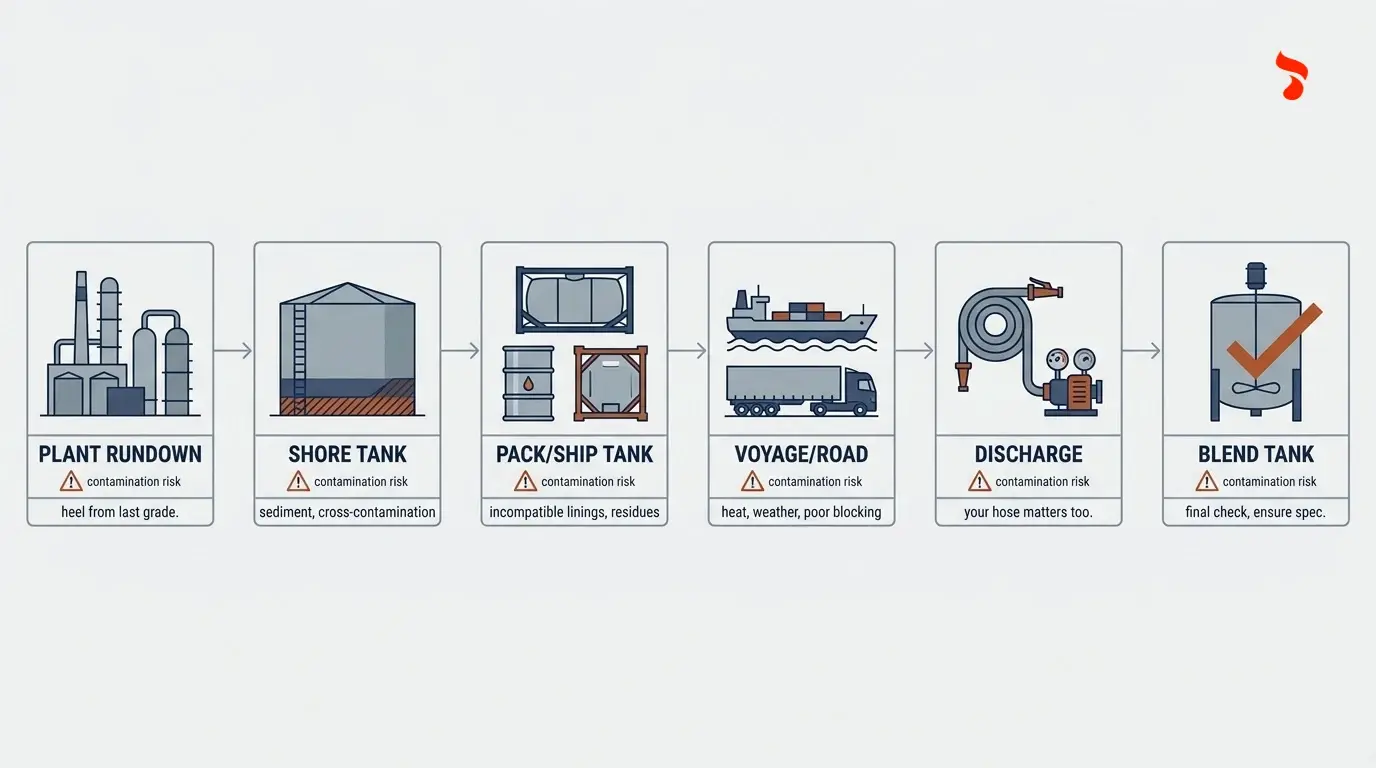
It starts at the plant rundown. The finished cut goes into a shore tank or straight into a line, and that's where the lot number is born.
Then it sits in a shore tank for a while, and whatever was in that tank last leaves a heel behind. Worth asking about. A Group I SN150 pumped right after a fuel cut isn't really SN150 anymore, not in any way that matters to your blend.
From there it goes into a pack or ship tank — drums, a flexibag, an ISO tank, or a compartment on a parcel tanker. This is where most contamination actually gets in.
Next comes the voyage or the road. Heat is hard on heavy grades. Bad weather beats up drums. A flexibag that wasn't blocked properly shifts around and can tear.
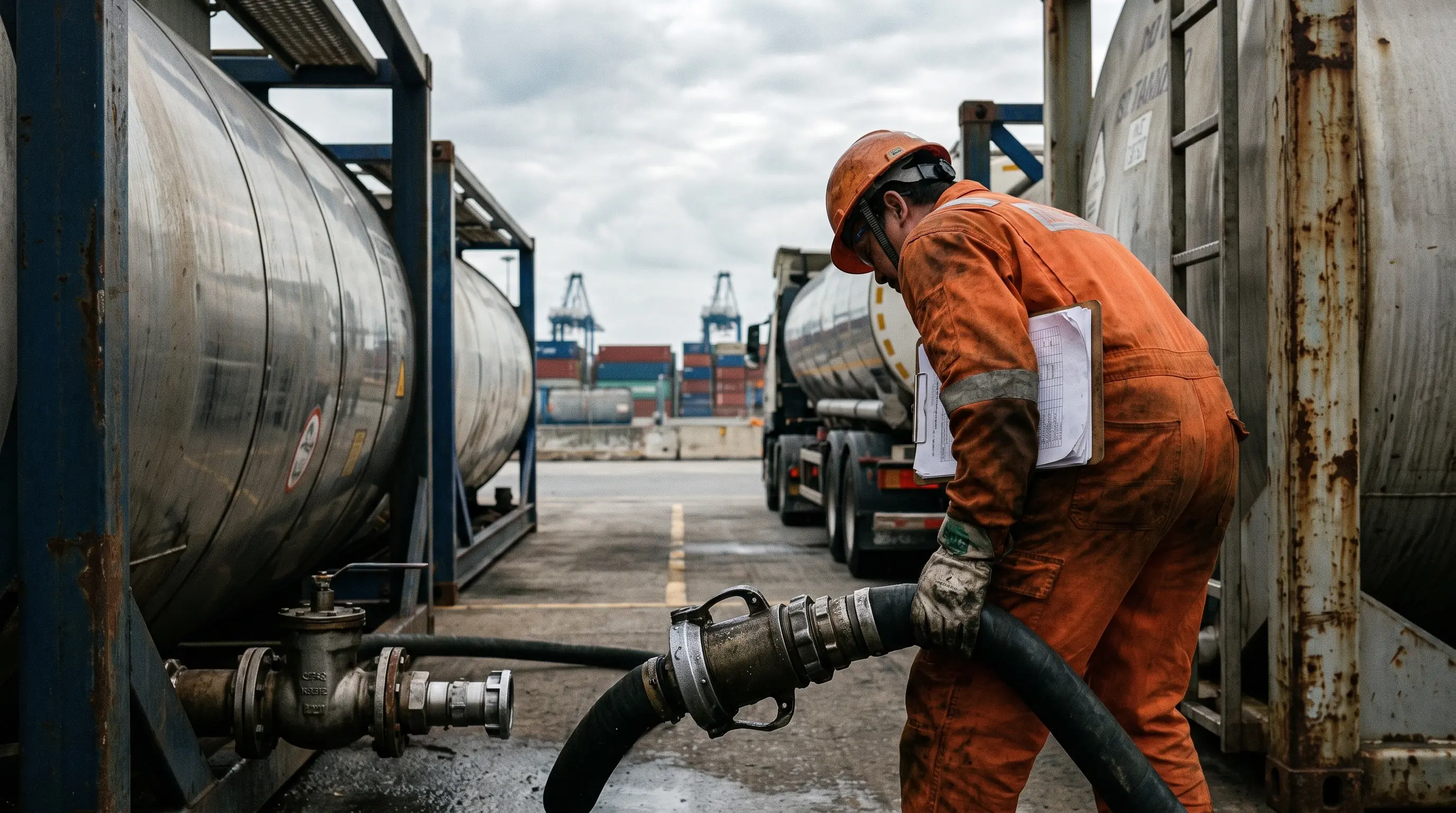
At discharge, it's your hose, your pump, your tank doing the work — and what ran through your line before this cargo matters just as much as what the seller's tank held.
Finally it reaches the blend tank, and the COA you keep on file needs to belong to this lot specifically. Not a sister tank filled two weeks ago that happened to test the same.
Along the way, a set of documents is supposed to travel with the cargo: lot COA, TDS, SDS, packing list, bill of lading, certificate of origin. Reading those sheets properly is a separate conversation. This one is about the physical journey.
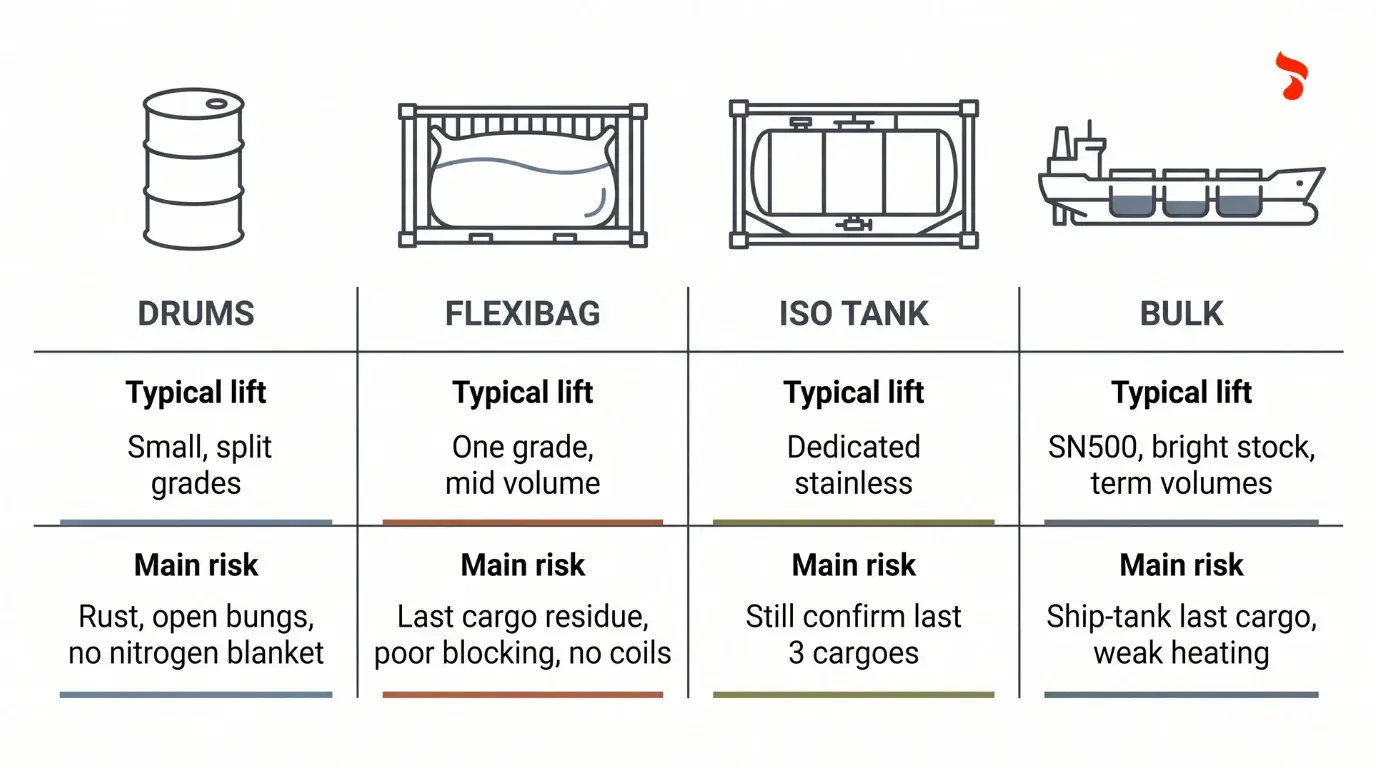
Drum weight and litre marks aren't standard across plants, so don't plan a blend on "200 kg" until the packing list actually says so. A flexibag isn't an ISO tank — no coils, full stop. Bright stock or cold SN600 sitting in a flexibag through a winter shipment is a good way to end up renting a yard heater you didn't budget for. Same rule applies to every base oil lift: name the pack on the quote, don't leave it open.
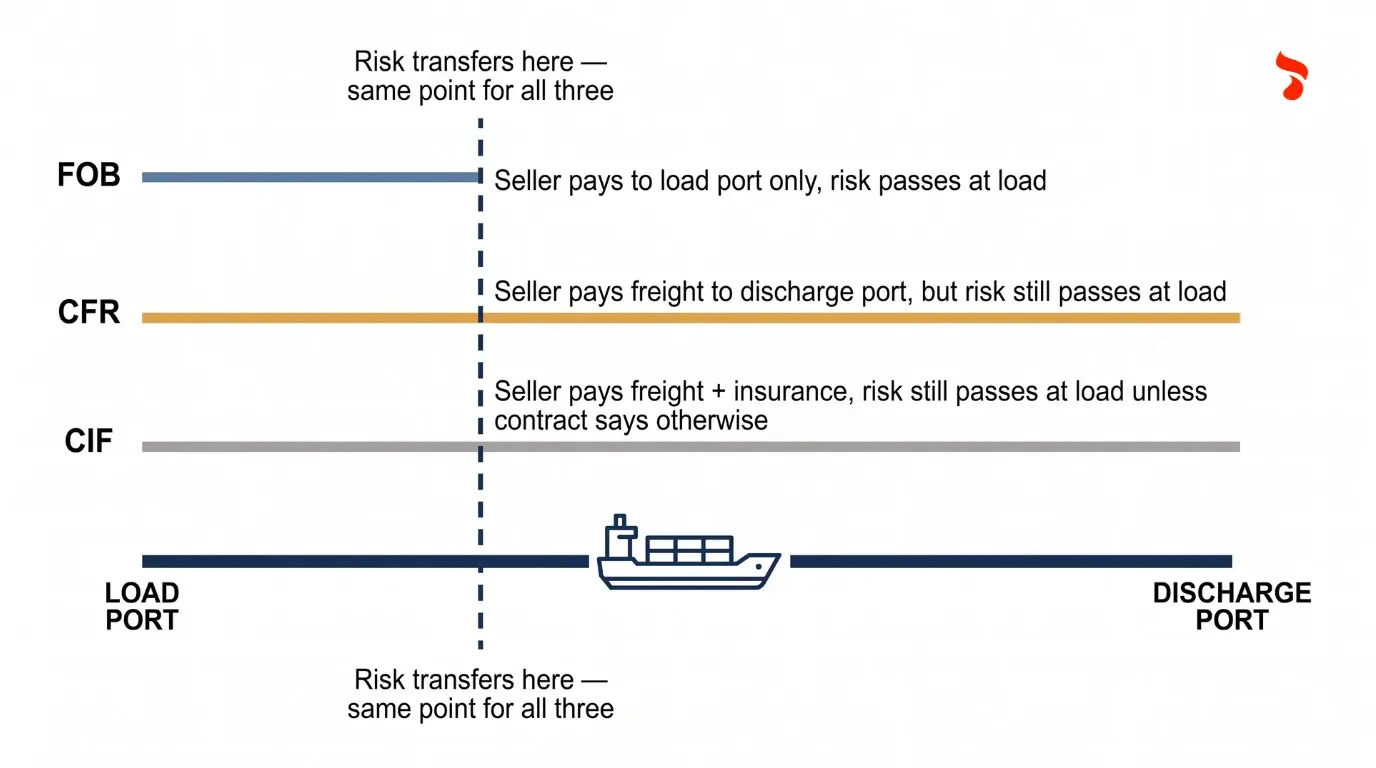
Buyers mostly work with three Incoterms. Skipping the textbook definitions, here's what each one does in practice.
Name the actual port. "World" isn't an Incoterm and neither is "CFR MEA" — those are placeholders, not terms. Load-port inspection protects you on an FOB deal. Discharge inspection protects the voyage itself. If it's a first lift or a heavy grade, do both, not one or the other.
Last cargo is the detail that gets skipped more than any other. What did that shore tank, flexibag, ISO tank, or ship tank hold right before your oil went in? Fuel, biodiesel, a chemical, or a heavier residual can shift flash point, colour, or KV without anyone noticing until the blend fails. A named list of the last three cargoes and a clean certificate costs a fraction of what a failed blend costs.
Water hides in tank heels and in drums that weren't sealed properly. Heat and air oxidise a pale SN150 that sat unblanketed too long. Even your own discharge hose can ruin a perfectly clean load COA if the last thing pumped through it wasn't the same grade — flush or pig the line if it wasn't.
And commingling happens more than people admit. Two tanks both labelled "SN500" get treated as interchangeable and merged, and now two clean lots are one questionable one. SN is a viscosity band. It was never meant to be a licence to mix.
SN500, SN600, and bright stock don't pour the way SN150 does. That's the whole reason coiled ISO tanks and coiled ship tanks exist. Put an actual temperature band on the shipping recap — hot enough that the oil pumps, not so hot that colour and flash point start to cook. A flexibag has no coil at all. If it's heading somewhere cold, don't put bright stock in a bag and hope the weather cooperates.
The load COA tells you about the still. The discharge COA tells you about the voyage. Ideally both were run under the same methods — D445, D2270, flash, colour — so they're actually comparable side by side. A flash point that drops between load and discharge is fuel contamination or a dirty tank. It is not "normal settling," whatever anyone tells you. A colour that's jumped points to air, heat, or last cargo. Hang onto both sheets alongside the bill of lading.
Bring in SGS or Bureau Veritas for a first lift, a packing type you haven't used before, or a parcel you can't easily replace within a week. A real inspector samples the tank or the line directly — not whichever drum the seller happens to hand over.
Same standard you'd hold an SN150 purchase to. If a supplier can't name the last cargo and the pack type without hesitating, that tells you most of what you need to know.
How does base oil actually get from the plant to a blending tank?
Shore tank or line first, then it's packed into drums, a flexibag, an ISO tank, or bulk for the truck or vessel, and finally discharged into your tank. Every hose along that route is a place contamination can get in.
Drums, flexibag, ISO tank, or bulk?
Small lifts, go with drums. Cheap door-to-door volume in a dry box, flexibag. A dedicated stainless box, ISO tank. And bulk when the parcel's big enough to justify a ship tank.
Who's holding the risk under FOB, CFR, and CIF?
FOB passes risk at the load-port rail. CFR has the seller paying freight, but risk still moves at load. CIF adds insurance on top. Whichever term you use, name the port.
Is it worth testing at both load and discharge?
On a first lift or a heavy grade, yes. The load COA vouches for the still. The discharge COA vouches for the voyage.
Why do heavy grades need heat management?
Cold SN500, SN600, and bright stock barely move. Coils plus a written temperature band keep them pumpable without cooking the colour or flash point out of them.
What does "last cargo" actually mean here?
Whatever the tank, bag, or ship compartment carried right before your oil did. Fuel or a chemical as the last cargo means walk away, unless there's a certified cleaning behind it.
Synergysol Trading supplies Group I, II, and III base oils to blenders across the Middle East, Africa, and Europe. Every quote we send names the pack, the Incoterm, and a lot COA. We don't leave the port blank, and we don't invent one either.
Reach out to Synergysol Trading for current availability, packing options, and lead times.