
Base Oil Sourcing Guide for Blenders: How to Buy When Supply Is Unpredictable

You placed the order at a good price. Then the vessel slipped two weeks, the next quote came in higher, and your blending plant started rationing grades. For many blenders, the cheapest invoice price has quietly become the most expensive way to buy base oil.
When supply is unpredictable, a single purchasing habit is a risk in itself. This base oil sourcing guide explains how to build a buying approach that protects your production without overpaying.
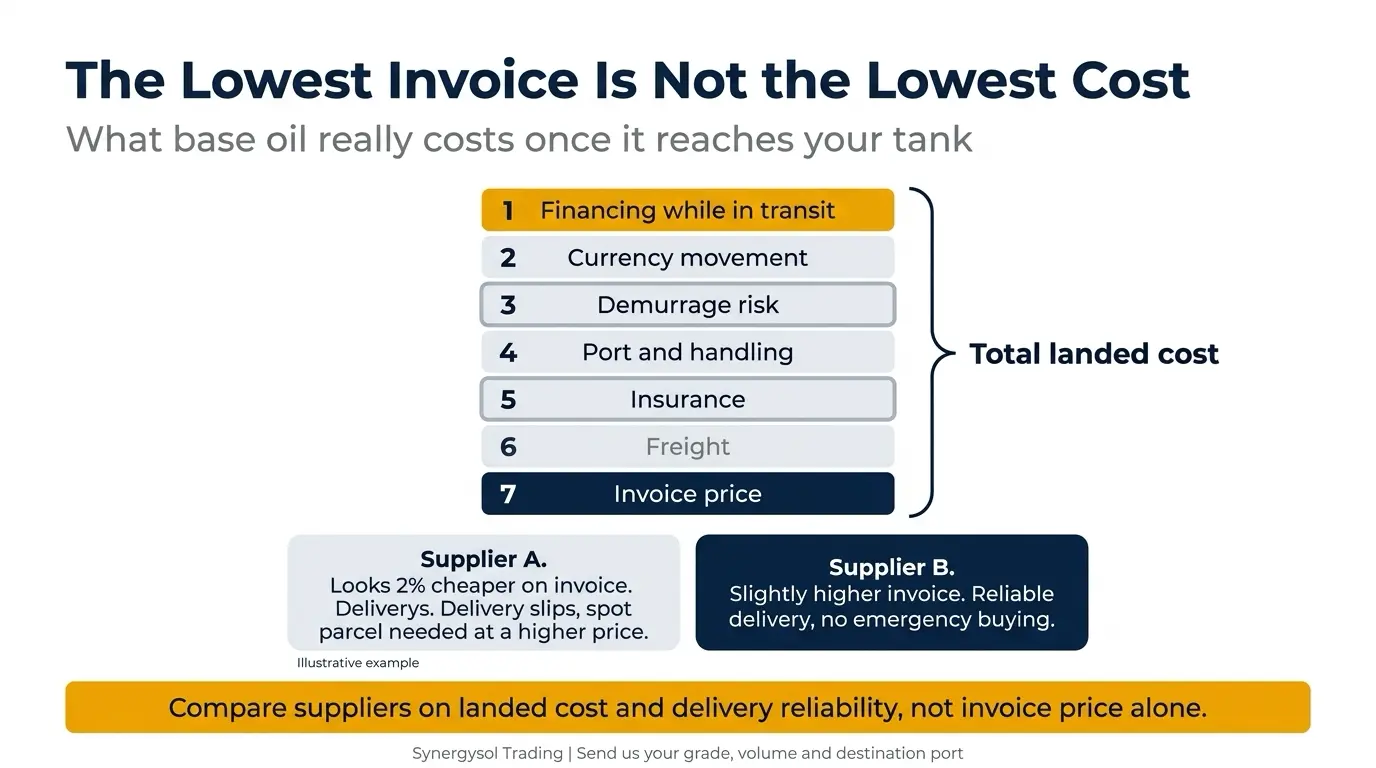
An invoice price tells you what the supplier charges. It does not tell you what the oil costs once it is in your tank. Landed cost adds freight, insurance, port and handling charges, demurrage risk, currency movement, and the cost of financing stock while it travels.
As an example, a cargo that looks 2 percent cheaper at the invoice stage can end up costing more if a delay forces you to buy a spot parcel at a higher price to keep the plant running. Judging suppliers on total landed cost, and on how reliably they deliver, gives a truer comparison.
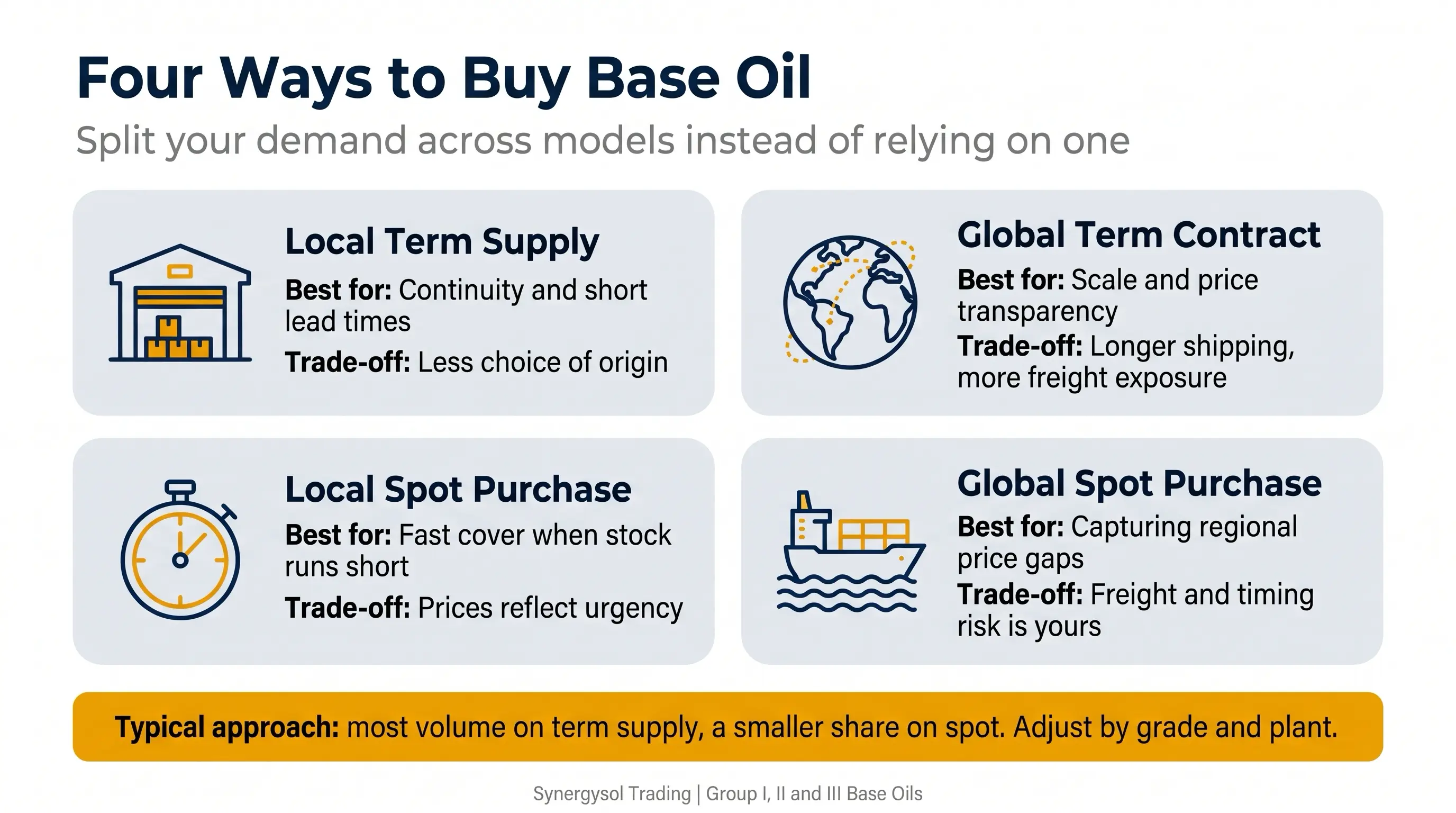
Most blenders do better by splitting demand across several buying models instead of relying on one.
An illustrative split for a blender with steady monthly demand might keep most volume on term supply and leave a smaller share for spot buying, so you can respond to opportunity without depending on it. The right mix varies by grade and by plant, so treat any split as a starting point.
Two contracts with the same headline price can behave very differently. Before signing, check these points:
A formula that resets slowly can protect you in a rising market and hurt you in a falling one. Know which way your contract leans.
In many recent disruptions, the oil existed but moving it was the problem. Route changes, trucking limits and port congestion all add days. Ask each supplier about loading windows, storage locations, container or tank options, and what they do when a route closes. A supplier with a backup route is worth more than one with a slightly lower price and a single path.
Holding extra inventory ties up cash, yet running thin leaves you exposed. Many blenders set a minimum cover level for each critical grade, measured in days of production, and trigger a new order when stock drops to that line. Review it each quarter as lead times change.
Is spot or term buying better for base oil?
Neither wins on its own. Term supply protects continuity, while spot buying adds flexibility. Most blenders mix both.
What is landed cost in base oil buying?
It is the invoice price plus freight, insurance, port and handling charges, demurrage risk, currency movement and financing cost.
How much base oil stock should a blender hold?
It depends on lead times and grade. Many blenders set a minimum cover in days of production for each critical grade and review it quarterly.
What should I check in a base oil pricing formula?
Check the index basis, averaging and lag, fixed adders, caps and floors, and any volume rebates.
Unpredictable supply does not have to mean unpredictable production. Synergysol Trading supplies Group I, II and III base oils to distributors, blenders and fleet operators across Africa, Asia, Middle East, and Europe, and we price every offer with your landed cost in mind, not just the invoice.
Send us your grade, monthly volume and destination port, and our team will come back with clear options on price, lead time and delivery routes, so you can plan your next orders with confidence.