
Why Base Oil Prices Follow Diesel Prices (and What It Means for Buyers)
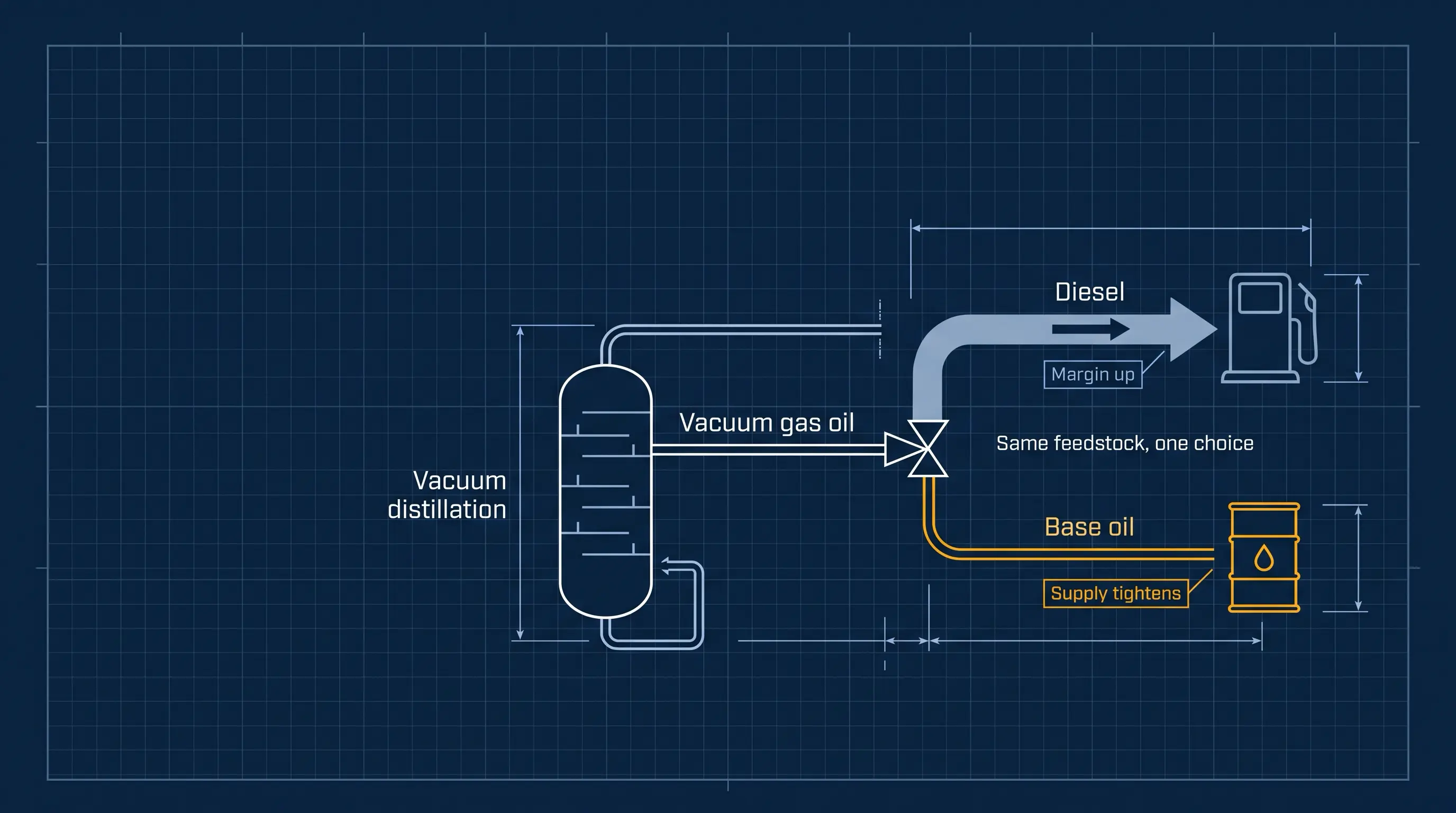
Diesel prices jumped, and a few weeks later base oil prices followed. Nothing changed in lubricant demand, yet the price moved anyway. This is not a coincidence. Base oil and diesel come from the same refinery system, and they compete for the same material.
Understanding that link helps you time purchases, read quotes with more confidence, and avoid reacting to every price spike.
Crude oil is first heated and separated by distillation. The heavy part that remains is then distilled again under vacuum. One of the cuts from that step is vacuum gas oil, a material that sits at the center of this story.
Refiners can send vacuum gas oil in different directions. It can be converted into diesel and other fuels, or it can be processed into base oil. Group I base oil is produced by solvent refining and dewaxing of vacuum distillates. Group II and III base oils rely on hydroprocessing or hydrocracking, where the heavier fractions are upgraded through more severe processing. Either way, the plant has to decide where limited feedstock and capacity go.
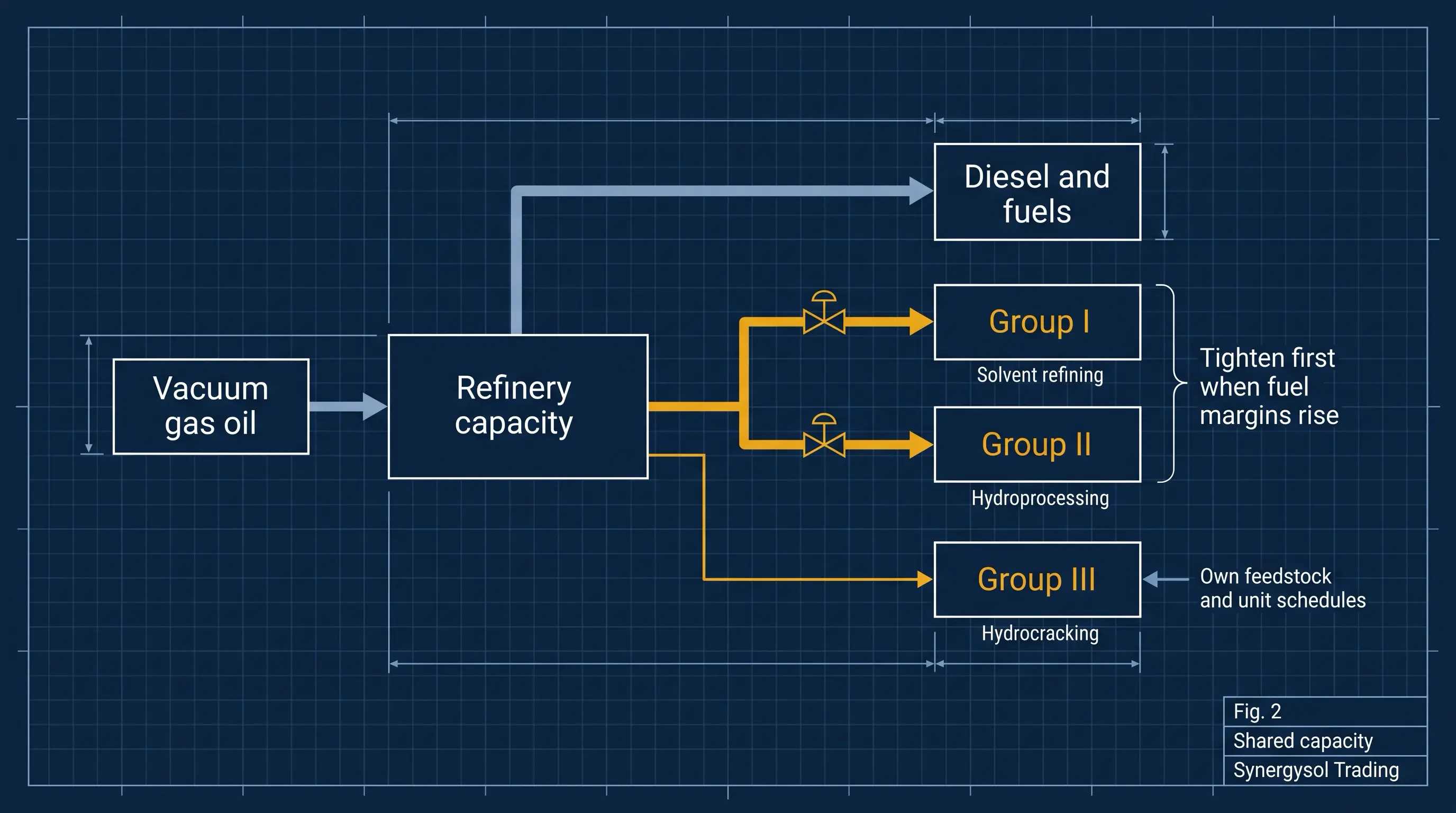
A refinery is a business that chases margin. When diesel margins are strong, there is a clear incentive to send more heavy distillate toward fuels. Base oil is usually a smaller part of the output, and base oil units are often a minor line inside a much larger fuel-focused plant.
When fuel margins rise, base oil production is the easier thing to trim or deprioritize. Less base oil reaches the market, supply tightens, and prices rise to attract volume back. That is how diesel strength travels into the base oil market.
Base oil usually sells at a premium to diesel because it takes additional processing and quality control. That premium acts as the refiner’s reward for staying in base oil production. When diesel climbs faster than base oil, the premium narrows. When it narrows too far, the case for making base oil weakens, and supply tightens until the price adjusts. When diesel stays elevated, falling base oil prices often find a floor.
Group I and Group II come from plants that share feedstock and processing capacity with fuel production, and many Group I units are older and less central to the refiner’s plans. When margins push refiners toward fuels, these grades are often the ones that tighten. Group III has its own drivers, including specific feedstock availability and the shutdown or restart of particular units, so it does not always move in step.
Diesel is one driver among several. Keep these in view as well:
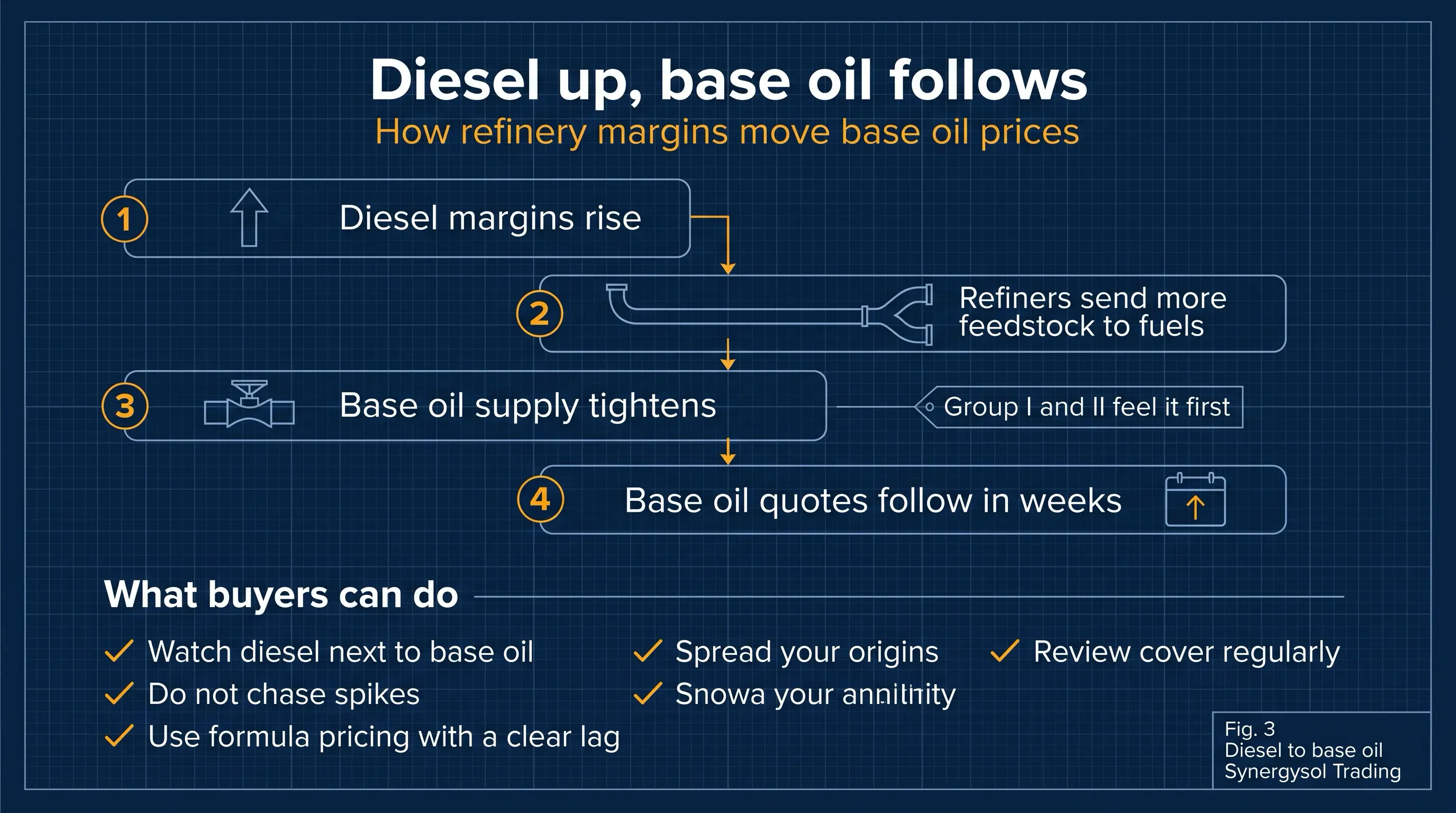
You cannot control refinery decisions, but you can respond to them sensibly:
Synergysol Trading supplies Group I, II and III base oils to blenders and distributors across East Africa, the Middle East, Sudan and Europe. If your price planning needs a second view, send us your grade and monthly volume. We will talk through timing and sourcing options based on what is happening in the market now.