
Why Group III Base Oil Demand Keeps Growing
.webp)
The global lubricants market is experiencing a paradigm shift. Electrification, sustainability objectives, supply chain issues, and new automotive technology innovations are forcing lubricants manufacturers and distributors to rethink their approach to base oils. While other industries have faced challenges recently, there is one industry that remains a favorite among investors: Group III base oils.
During the last decade, the consumption of Group III base oils and Group III+ base oils has seen steady growth despite a stagnant market for other types of base oils. New refineries are being built in North America, Europe, Asia, and the Middle East. Meanwhile, more and more lubricant blenders use high-quality base oils to meet current needs.
But why is that the case, and what makes Group III base oil manufacturing attractive despite market volatility?
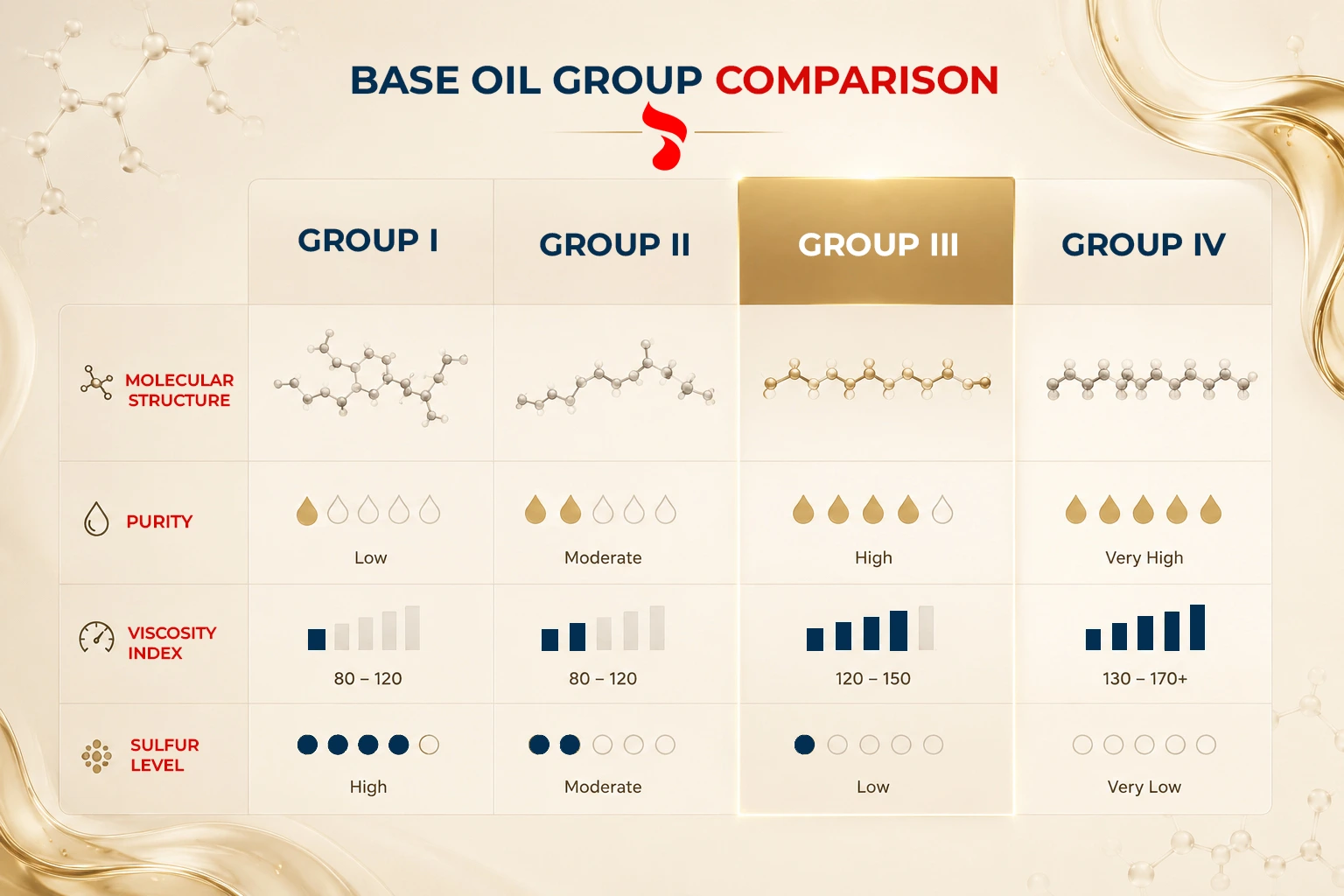
Group III base oil is a highly refined base oil made from minerals with a high viscosity index, low sulfur content, and good oxidation resistance. Group III oils offer superior thermal characteristics, reduced volatility, and efficiency compared to other mineral oils such as Group I and Group II.
Such characteristics make Group III oils highly significant in synthetic and semi-synthetic lubricant production. Many low viscosity PCMOs, heavy duty engine oils, and industrial lubricants incorporate Group III and Group III+ base oils into their production.
Modern vehicles have more advanced technology than old vehicles. This implies that lubricant demands have become stringent. Oils used in the production process must promote efficient fuel consumption and minimize emissions. Moreover, the lubricants should be stable at high temperatures.
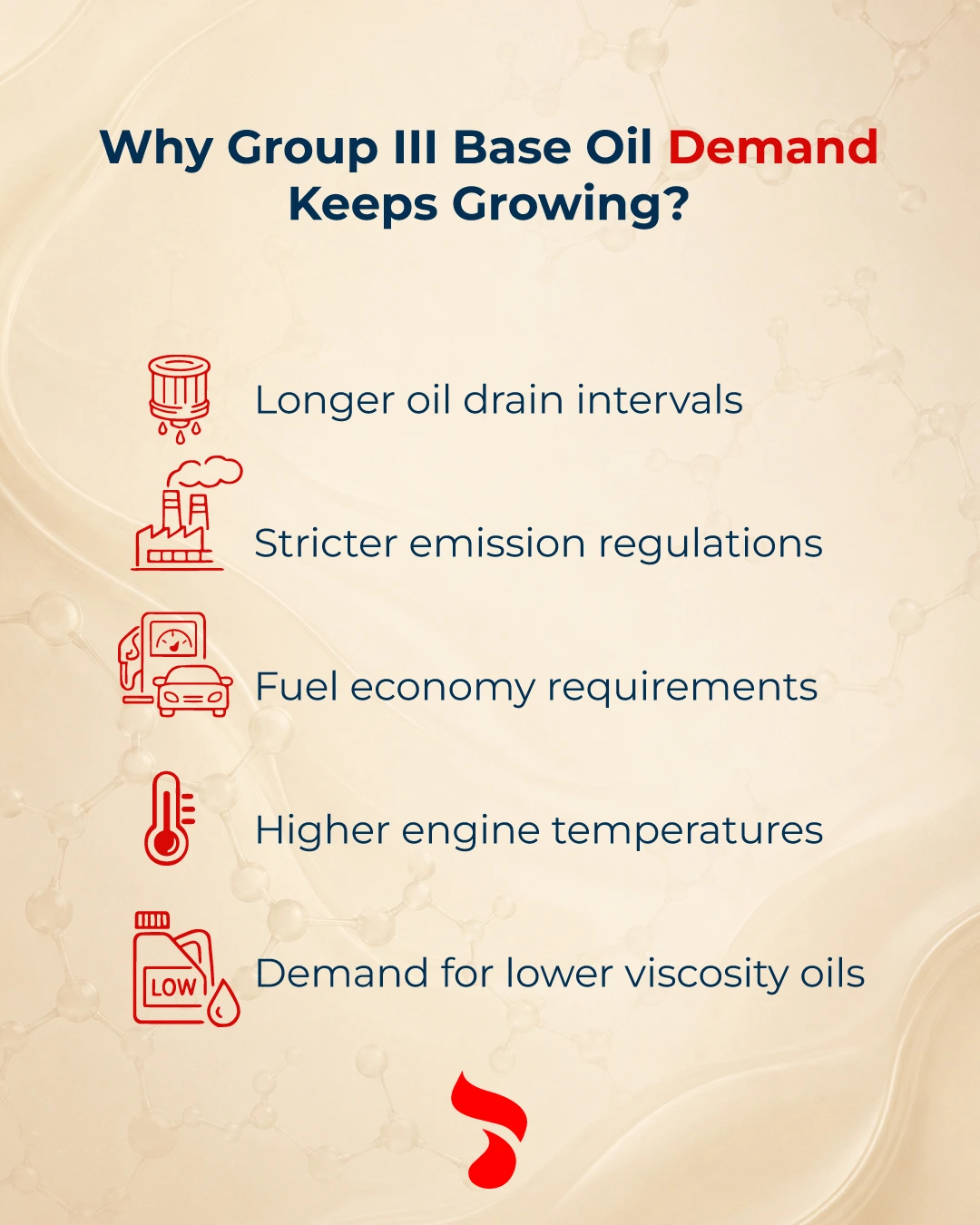
One of the biggest reasons behind growing Group III base oil demand is the shift toward premium lubricants. Around the world, lubricant manufacturers are moving away from conventional formulations and toward synthetic and semi-synthetic products.
This transition is driven by several factors:
Engine oils with low viscosity like 0W and 5W grades have been showing growth in popularity on a global level. Such oils have higher demands for better-performing base oils, which means that Group III oils are becoming indispensable when it comes to formulation.
Despite the decreasing demand for passenger car motor oils in developed countries because of vehicle electrification, the demand for the Group III component in lubricants is getting bigger. Put differently, even if the amount of lubricant is reducing, the demands for quality are growing substantially.
Electric vehicles are considered a challenge to the demand for lubricants. Although the growth of electric vehicles will lower demand for conventional engine oils in the long term, the shift is not taking place at a pace as predicted by many earlier reports.
The current fleet of vehicles consists mostly of hybrid vehicles, plug-in hybrid vehicles, and internal combustion engine vehicles. In many countries, there are delays in the implementation of ambitious targets for electrification due to several reasons including economic challenges, inadequate infrastructure, and political tensions.
Therefore, the market for quality lubricants continues to be robust. In some cases, hybrid engines operate under harsher conditions and need better-quality lubricants compared to their predecessors.
In such a situation, the use of Group III and Group III+ base oils is significant since they are commonly used in high-quality automotive lubricants.
Another major growth driver is the rapid expansion of synthetic and semi-synthetic lubricants across automotive and industrial sectors.
Compared to conventional lubricants, synthetic products provide:
Because of these advantages, synthetic lubricants are increasingly used in passenger vehicles, heavy-duty transport, industrial machinery, and specialized applications.
Group III base oils play a dominant role in these formulations because they offer an effective balance between performance and cost. While Group IV PAO oils remain important for ultra-premium applications, Group III oils have become the preferred choice for many mainstream synthetic lubricant products.
This trend is expected to continue over the next decade as lubricant manufacturers focus on higher-performance formulations and tighter OEM specifications.
.jpg)
Sustainability will be another important trend that will impact the future of the lubricant industry. This has increased attention on re-refined base oils, which are widely referred to as RRBOs.
Traditionally, re-refined oils were associated with lower-grade products, but this perception is rapidly changing. In fact, OEM approval for recycled base oils marks a major industry shift, as discussed in our analysis on Recycled Oil Is Now OEM Approved.
👉 Read More : Recycled Oil Is Now OEM Approved
It is significant since such oils offer not only ecological but also technical advantages. They contribute to the reduction of waste oil and help implement sustainable development practices.
It is interesting that there are several companies that have already invested in Group III RRBOs manufacturing capabilities. The main markets are North America and Europe.
At first glance, continued investment in new Group III production facilities may seem surprising, especially since the global base oil market already faces surplus capacity in some segments.
However, the Group III market operates differently from more commoditized base oil categories.
Unlike Group I and many Group II products, Group III oils maintain a premium market position due to their technical performance and OEM approvals. In many cases, lubricant blenders prioritize product consistency, certification support, and supply reliability over simple cost considerations.
Several additional factors are supporting investment decisions:
Since the COVID-19 pandemic, supply chain disruptions and geopolitical tensions have encouraged lubricant manufacturers to diversify sourcing strategies and reduce dependence on limited production hubs. This has increased interest in regional Group III production capacity.
New plants announced in the United States, Europe, South Korea, and other regions reflect this broader strategic shift.
.webp)
Even amid uncertainties about global economic conditions and vehicle electrification in the long run, the future looks bright for Group III base oils.
Increasing demand growth will no longer rely on increases in the number of lubricants used. On the contrary, growing demand will be due to changing formulations, quality improvements, and the worldwide trend toward premium lubricants.
With increasing complexity of modern engines, the trend toward more demanding specifications for vehicles will make it necessary to include Group III and Group III+ base oils into the composition of lubricants.
On the other hand, a growing share of re-refined Group III oils brings another dimension to the market as sustainability and high performance meet.
Knowledge about the trends mentioned above will be indispensable in predicting the future of the global base oils market.
👉 If you are interested in learning more about it, at SynergySol Trading, we follow developments in the global lubricants and base oils markets.