
Why Your Engine Oil Fails in Summer Heat

It is common for fleet managers from East Africa and the Middle East to find that their engines exhibit wear, excessive oil consumption, and lower efficiency every year during summer, despite the reliability of their engines during colder months. There is nothing wrong with the oil; the problem lies with the environmental conditions under which the oil is working.
This is simply due to the fact that lubricants become less viscous when the temperature rises. This is a property of all oils. But the question is not if the oil becomes thinner, but if it thins to a point where it cannot keep up with the demands of the engine under high temperatures. If the viscosity is beyond the minimum threshold set by the engine manufacturer, there will be excessive friction between important components such as bearings and piston rings.
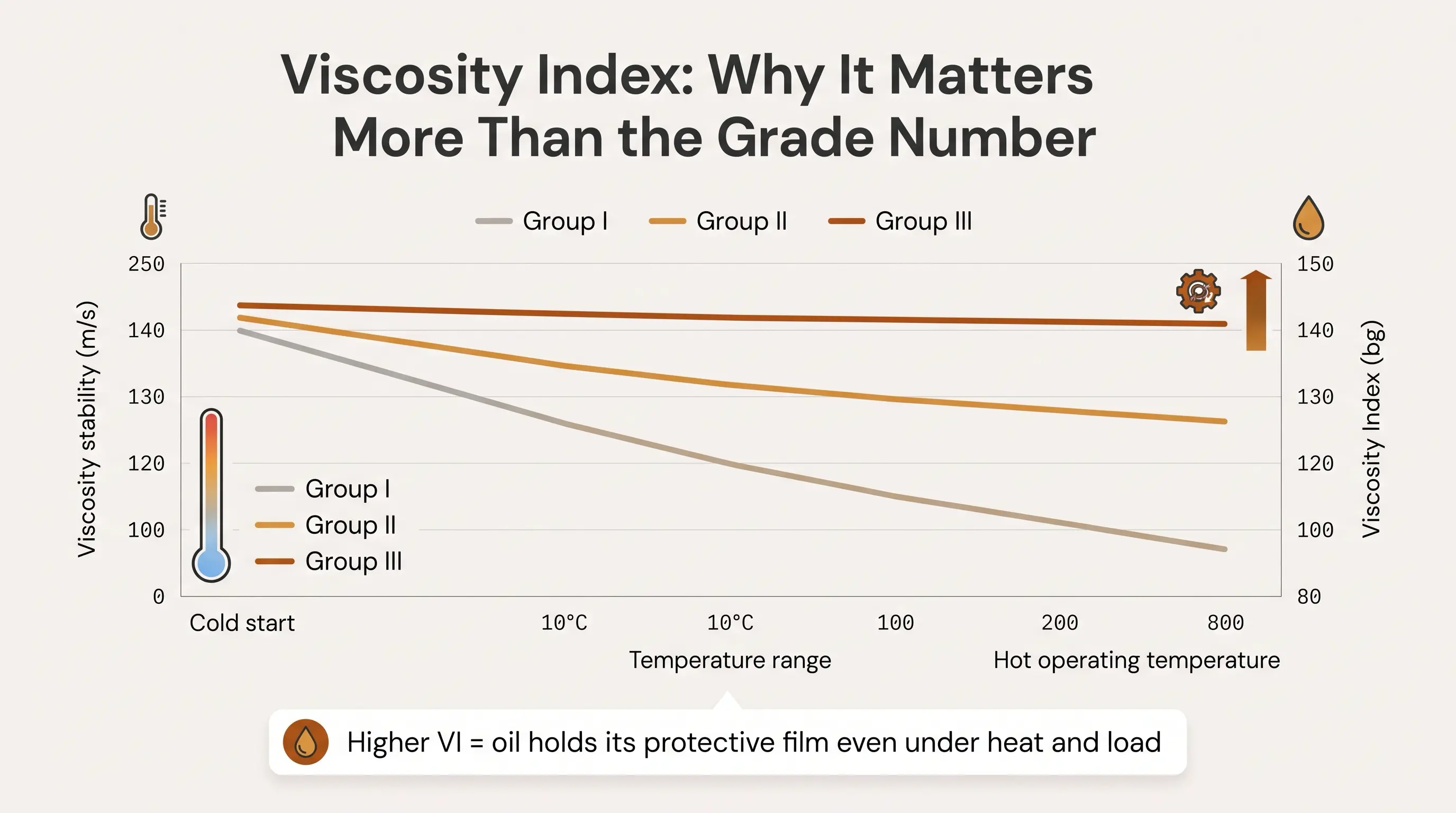
The Viscosity Index, or VI, refers to the degree to which the viscosity of an oil varies over a certain temperature range. A high VI indicates an oil that does not thin too much when heated and does not thicken too much when cooled. It is a measure of stability, not viscosity.
It becomes much more important in hotter climates than many consumers appreciate. Two oils may have the same viscosity rating when they start out at room temperature, but behave very differently when they get heated up and put under pressure. The oil with the high VI keeps its film-forming characteristics intact, while the oil with the low VI reaches dangerously close to the state of becoming too thin when it counts the most – during actual engine work.
Group I base oils fall at the bottom of the VI spectrum. Group II oils perform better. Group III oils, typically hydrocracked, show superior natural VI to other Groups and maintain their viscosity characteristics in a wider range of temperatures. For operations in permanently hot climates, the difference cannot be considered minor.
A 15W-40 or 20W-50 designation gives you the behavior of the oil when it is cold, the W number, and the behavior when it is at operating temperature, the number afterward. If you live in a warm environment, the first inclination would be to go for the heavier oil, the thicker the better.
The reality, however, is that the thicker oil might not provide sufficient lubrication during the cold start and could cause additional friction. The only factor which truly matters is if the oil stays within its viscosity range when it achieves operating temperature due to heat and stress conditions in the engine.
In this case, the quality of the base oil wins over whatever is written on the label. Two different oils with the same designation but from two separate brands will show vastly different results when tested against heat and stress.
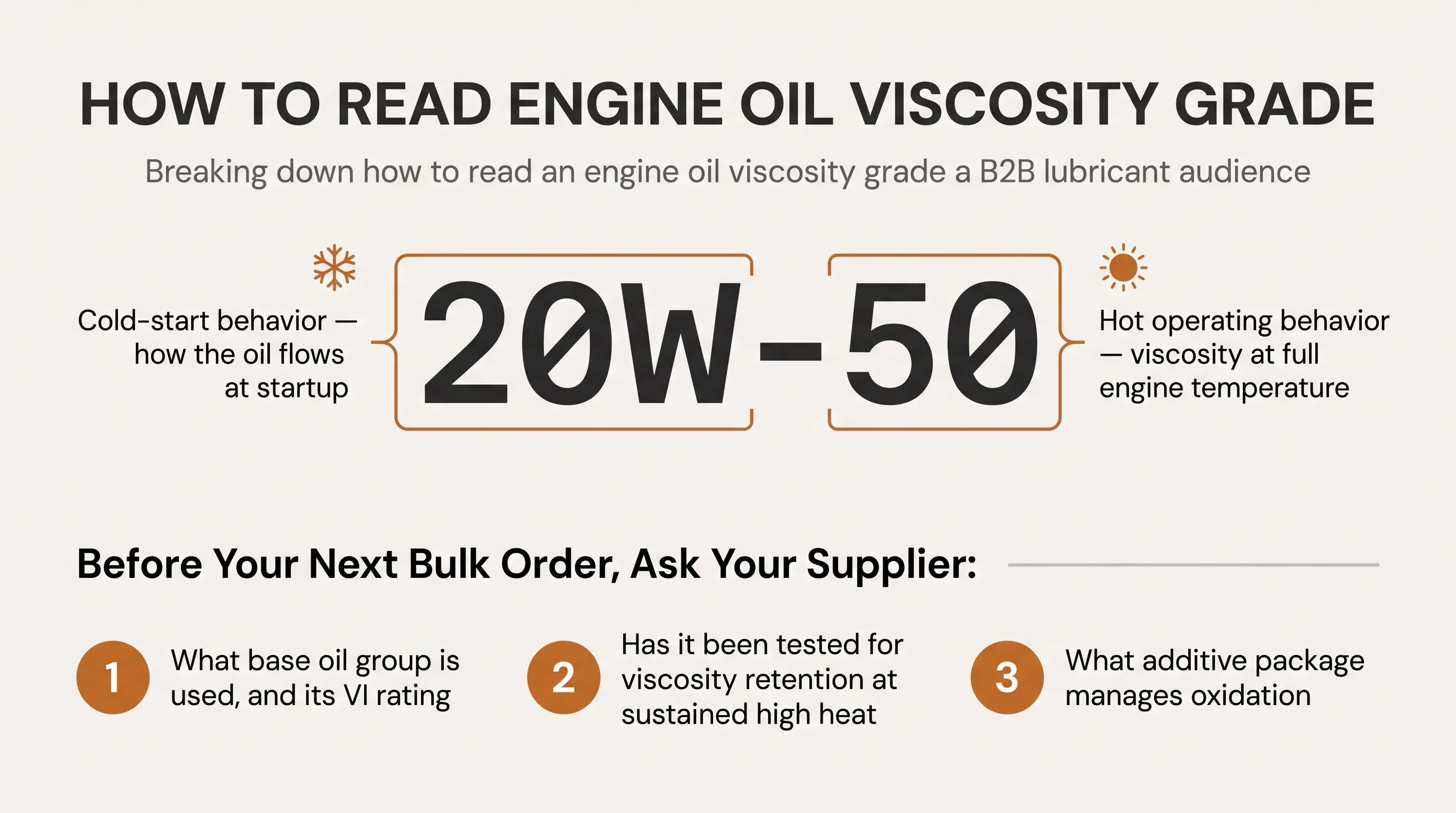
Before placing your next bulk order, ask what base oil category the oil falls into and what its VI value is. Ask whether the oil has undergone tests for viscosity maintenance under prolonged exposure to high temperatures, not just a test conducted at one point of reference. Finally, ask how the oxidative process is managed through additives.
If the supplier cannot provide this information, there’s all you need to know about the oil before placing your order.
At Synergysol Trading, we supply Group I, Group II, and Group III base oils to lubricant blenders and manufacturers across the Middle East, Africa, and Europe. Our sourcing is built around consistent VI performance, not just a viscosity number on a spec sheet, because that consistency is what protects finished lubricants once they are out in the field and under real heat.
Heat does not just make oil thinner. It exposes the gap between base oils that look identical on paper and perform very differently in the field. Choosing a lubricant built on a stable, high VI base oil is not a premium upsell. It is a direct way to cut wear-related downtime in the exact conditions your equipment runs in every day.
Reach out to Synergysol Trading to discuss your base oil supply requirements or Ignitol lubricant needs.